



“Memory Boom Leads to 6x Increase in DS Operating Profit”
Pricey Galaxy Phones Expected to See 43% Decline,

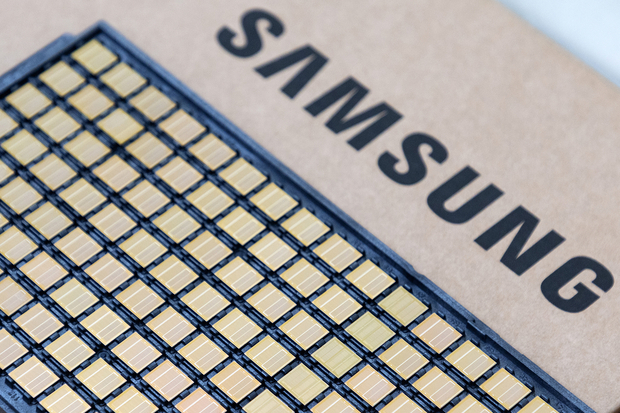
Samsung Electronics HBM4. Photo courtesy of Samsung Electronics,
,
, Samsung Electronics(005930) is leveraging its supply advantage to significantly raise prices and maximize profits in the global market for AI memory semiconductors, which are currently in short supply. However, with its smartphones now also facing cost pressures due to memory costs, the company is internally debating its marketing strategies.’,
,
, ‘According to industry sources on the 19th, Samsung Electronics’ HBM4, mass-produced and shipped last week, is priced at approximately $700 (around 1 million KRW), which is 20-30% more expensive than its predecessor, the HBM3E. The rising DRAM prices, which are the primary material for HBM, have enhanced Samsung’s pricing power in the new product market. Market research firm Counterpoint Research forecasts that DRAM prices will rise by 80-90% in the first quarter compared to the previous quarter. Samsung’s HBM4 is slated to be used in NVIDIA’s next-generation AI semiconductor, “Vera Rubin,” which will be unveiled next month.’,
,
, ‘The rise in prices for general-purpose DRAM required for smartphones and PCs has also bolstered Samsung’s negotiation leverage. Given that Samsung holds market influence in both HBM and general-purpose DRAM, the company can focus on maximizing profitability by balancing production capacity (capability) between these products rather than solely concentrating on high-margin products like HBM. Among the major memory companies, including SK Hynix and Micron, Samsung has the largest production capacity.’,
,
, ‘Samsung is reportedly formulating a production strategy for both HBM and general-purpose DRAM. With HBM, the company announced on the 12th of this month that it was the first in the industry to mass-produce and ship HBM4, aiming to more than triple related sales compared to last year. With the continuous rise in prices for not only DRAM but also NAND this year, there is also a projection that Samsung could achieve an annual operating profit of 250 trillion KRW.’,
,
, ‘However, this memory shortage is not entirely a boon for Samsung. Another key business, smartphones, is inevitably losing price competitiveness due to surging costs. Smartphone component costs (BoM) have already risen by 10-25% from early last year to the end of the year, with a further increase of 10-15% expected by the second quarter this year. Accordingly, Samsung plans to raise the domestic price of its flagship new product, the “Galaxy S26,” to be unveiled at “Galaxy Unpacked 2026” on the 25th (local time) by 100,000 to 200,000 KRW compared to its predecessor, depending on the specifications. For the Galaxy S26 Ultra 512GB model, the price is expected to exceed 2 million KRW.’,
,
, ‘KB Securities forecasts that while Samsung’s semiconductor business, Device Solutions (DS) sector, would earn an operating profit of 156 trillion KRW, far exceeding last year’s 24.9 trillion KRW, the mobile experience (MX) sector’s performance would decline from 12.9 trillion KRW to 7.4 trillion KRW. MX, which significantly affects non-memory performance, includes the smartphone itself as well as the custom application processor (AP, brain chip), Exynos, used in smartphones.’,
,
, ‘Samsung aims to offset some of the cost burdens by equipping the domestic model of the Galaxy S26 with the “Exynos 2600” while also highlighting new AI features to secure competitiveness.’,
,
,
,
,