

High Interest Rates Increase Housing Purchase Burden Index in Q4 Last Year , “The index that shows the financial burden, including loans, of purchasing a house nationwide rebounded after a year. In Seoul, the index reached its highest level in two and a half years, indicating that the threshold for acquiring a home has become even higher.”,
,
,
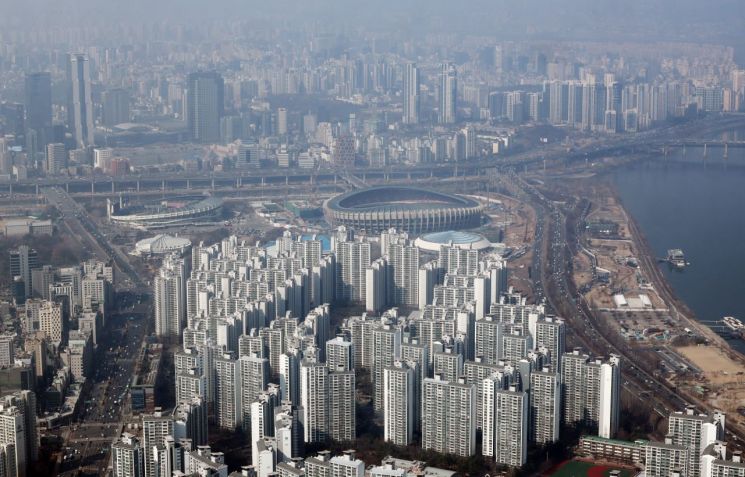
View of apartments in the Gangnam 3 districts from Lotte World Tower in Songpa-gu, Seoul. Yonhap News,
,
, “According to the Korea Housing Finance Corporation on the 6th, the Housing Purchase Burden Index (K-HAI) nationwide in the fourth quarter last year was 60.9, up 1.3 points from the previous quarter (59.6). After declining for three consecutive quarters since the fourth quarter of 2024, the index has reversed and risen again.” ,
,
, “The Housing Purchase Burden Index is an indicator that shows the level of principal and interest repayment burden for a median income household purchasing a median-priced house with a standard loan.”,
,
, “The increase in the housing purchase burden is because bank loan interest rates have generally risen. According to the Bank of Korea, the interest rate on new mortgage loans from deposit banks rose from 3.96% per annum in the third quarter of last year to 4.23% in the fourth quarter.”,
,
, “By region, the housing purchase burden in Seoul rose significantly. In the fourth quarter of last year, Seoul’s Housing Purchase Burden Index was 165.1, the highest since the second quarter of 2023 (165.2), reaching its peak in two and a half years. It jumped 9.9 points from the previous quarter, showing the largest increase in three years since the third quarter of 2022 (10.6 points).”,
,
, “While the index in all regions nationwide rose from the previous quarter, no region apart from Seoul exceeded 100. Following Seoul, Sejong had the second highest Housing Purchase Burden Index at 97.3, followed by Gyeonggi (79.4), Jeju (70.5), and Incheon (65.0).”